
Most new traders spend their time hunting for the perfect indicator, believing there’s some secret formula that will guarantee profits. Meanwhile, experienced traders focus on mastering a small set of proven tools that actually move the needle.
This is the first in a series exploring the trading tools that separate consistent performers from those still searching for shortcuts. We’re starting with one of the most effective—yet often misapplied—strategies in trading: VWAP.
What Is VWAP?
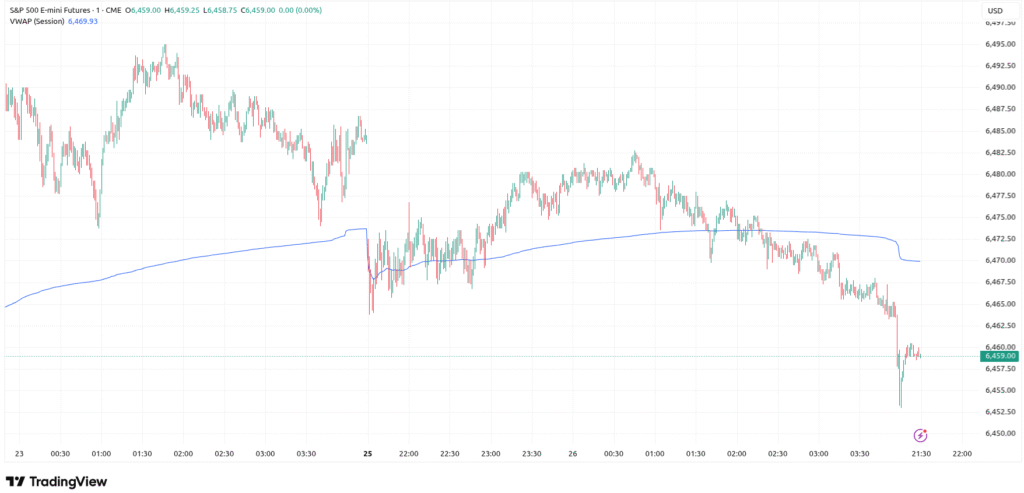
VWAP stands for Volume Weighted Average Price. Unlike a simple moving average, VWAP takes into account volume. Prices with higher traded volume carry more weight in the calculation.
👉 In simple terms:
- VWAP = the average price at which the most money is traded in a session.
- VWAP resets at the start of each session (unless anchored).
- It acts as a magnet, pulling price back after strong moves.
Why VWAP Matters in Trading
Volume drives markets. VWAP is important because:
- It shows where the bulk of trading happened.
- Institutions use VWAP to benchmark cheap vs. expensive trades.
- Price often gravitates back to VWAP, making it a reference point.
Watching VWAP is like watching the battlefield of supply and demand, not just the aftermath.
How to Use VWAP in Trading
VWAP is not a signal generator. Don’t just “buy above, sell below.”
Instead, treat it as a context tool:
- Is the price above or below VWAP?
- How does price react when it tests VWAP?
- What happens when the price deviates significantly from the VWAP?
This gives traders insight into who’s in control of the market.
Anchored VWAP: Advanced Usage
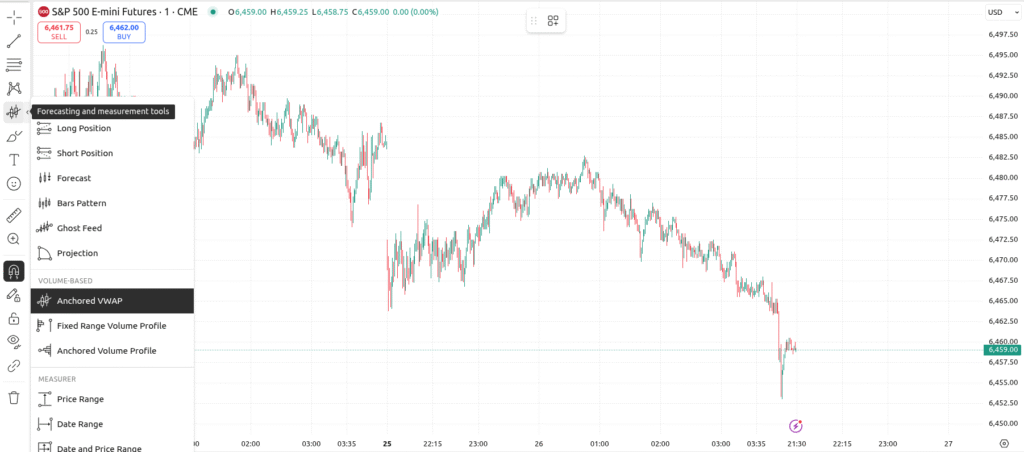
Unlike the standard VWAP, which resets daily, the Anchored VWAP provides a longer-term, context-driven view of how price action and volume have evolved since a specific event, helping traders identify potential support and resistance levels and assess market psychology. Many traders anchor VWAP to specific points:
- Quarterly VWAP for institutional benchmarks.
- Year-to-Date VWAP for long-term perspective.
- Monthly or annual anchors to track fair value.
Resources like Brian Shannon’s Anchored VWAP explain this in depth.
VWAP vs Other Indicators
Not everyone agrees on VWAP.
- Supporters: VWAP, volume profile, footprint charts, and heatmaps are used by professional traders.
- Sceptics: VWAP is overrated, more useful for institutions than retail traders. Some backtests showed it as statistically random.
The difference is context vs. signals. Tools like RSI or MACD can provide context, but VWAP is unique because it reflects real executed volume.
👉 Learn how EMA can be useful.
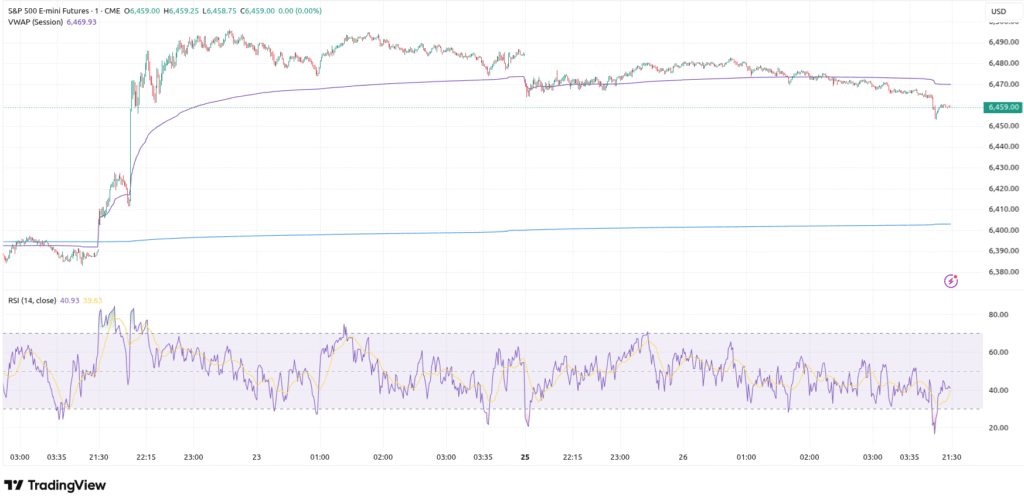
Example of trading with Anchored VWAP (Monthly), VWAP and RSI
Practical VWAP Applications
- Institutions: accumulate below VWAP, distribute above.
- Retail traders: use VWAP to manage profit-taking and reduce FOMO.
- Day traders: combine VWAP with EMA 9, RSI, and price action for confirmation.
- Scalpers: watch VWAP for mean-reversion opportunities.
Some also use VWAP bands (standard deviation lines). Opinions differ, but they can help visualise extremes.
Common Criticisms of VWAP
- Seen as basic since most beginners learn it early.
- Some argue it’s only useful for large orders, not for retail traders.
- Backtests show moving averages and linear regression can outperform VWAP in certain markets.
Still, VWAP remains one of the most referenced day trading tools.
VWAP + Structure = Trading Clarity
The true power of VWAP comes when combined with structure and key levels:
- Where is fair value?
- Who’s in control?
- Are big players defending VWAP?
- Is the price too far from VWAP and likely to revert?
This approach turns reactive trading into reading the market’s story.
What’s Next: ATR
This series is not about shortcuts—it’s about real tools.
The next article will cover ATR (Average True Range), a tool that changes how you set targets and manage risk.
Stay tuned.
Final Thoughts
VWAP won’t hand you winning signals. But when used as a contextual guide, it’s one of the most important tools in any day trading strategy.
Whether you’re trading stocks, futures, or forex, VWAP can help you understand liquidity, fair value, and institutional behaviour.
Master VWAP, and you’ll start trading with clarity—not noise.


