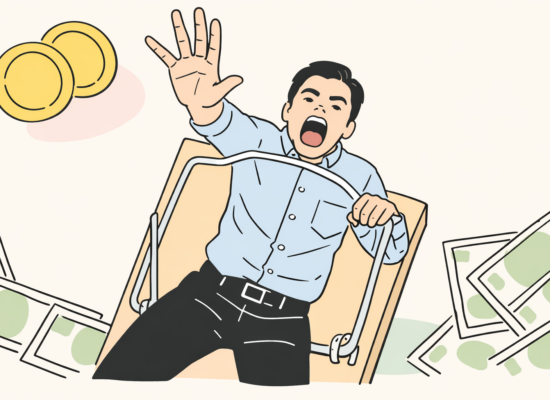
The hacks won’t work. Here’s what actually does — and why it matters even more in trading.
One of the biggest mistakes traders make is trying to hack their way to consistency.
You’ve probably heard the advice before:
“Just do it for two minutes.”
“Reward yourself after a good week.”
“Watch a motivational video before the market opens.”
I tried all of it.
I spent hours watching YouTube videos about productivity hacks and mental tricks. Some of them worked—for a few days. Then the novelty faded, motivation disappeared, and I found myself back in the same place.
The problem wasn’t the technique.
The problem was that tricks create temporary action. They don’t create lasting change.
In most areas of life, that’s merely frustrating.
In trading, it’s expensive.
Over the years, I’ve learned that consistency comes from a different place entirely. Here are five principles that actually work.
1. Know What You’re Really Fighting For
Most traders say they’re trading for money.
That’s rarely the real reason.
Money alone won’t carry you through a failed evaluation, a two-week drawdown, or a month where nothing seems to work while everyone else is posting winning trades online.
The traders who survive usually have a deeper reason:
- More freedom
- More time with family
- Escaping a job they no longer enjoy
- Proving something to themselves
Your “why” needs to be bigger than today’s P&L.
When trading becomes uncomfortable—and it will—your brain will always look for a reason to quit. A strong purpose gives you a reason to stay committed when motivation disappears.
Action Step
Place a reminder of your “why” somewhere you see every day: your trading desk, journal, or phone lock screen.
Not as decoration.
As a reminder of what you’re building when you’re tempted to break your rules.
That said, don’t confuse purpose with process.
Wanting financial freedom won’t stop you from revenge trading after a loss.
Your purpose keeps you in the game.
Your rules keep you from blowing up your account.
2. Protect Your Morning Like a Professional
Many traders lose control of their mindset before the market even opens.
The moment they wake up, they start scrolling:
- Social media
- News headlines
- Telegram alerts
- Market opinions
Before they’ve made a single decision, they’ve already allowed everyone else to influence their emotional state.
Trading requires patience, focus, and emotional neutrality.
Those qualities are difficult to access when your mind has been pulled in ten different directions before breakfast.
A strong morning routine isn’t about relaxation.
It’s about creating a mental foundation before the market starts testing you.
Action Step
Spend the first part of your morning offline.
Review your trading plan.
Read your journal.
Sit quietly with your thoughts.
Arrive at your desk focused and intentional—not reactive.
3. Don’t Force Action. Follow the Process.
A popular piece of self-improvement advice says:
“Don’t feel like it? Do it anyway.”
For fitness, that’s often excellent advice.
For trading, it can be dangerous.
“Screw it, I’ll take the trade.”
That’s how discipline gets confused with impulsiveness.
One emotional trade becomes two.
Two becomes a blown day.
Professional traders take a different approach.
They don’t suppress emotions.
They acknowledge them and follow their process anyway.
The feeling is allowed to exist.
The rules make the decision.
When frustration, FOMO, or overconfidence appears, you don’t need more willpower.
You need a framework that tells you exactly what to do next.
Action Step
When a strong emotion appears, name it.
Then return to your checklist.
If the setup isn’t there, the answer is already decided.
Your emotions can have a voice.
They just don’t get a vote.
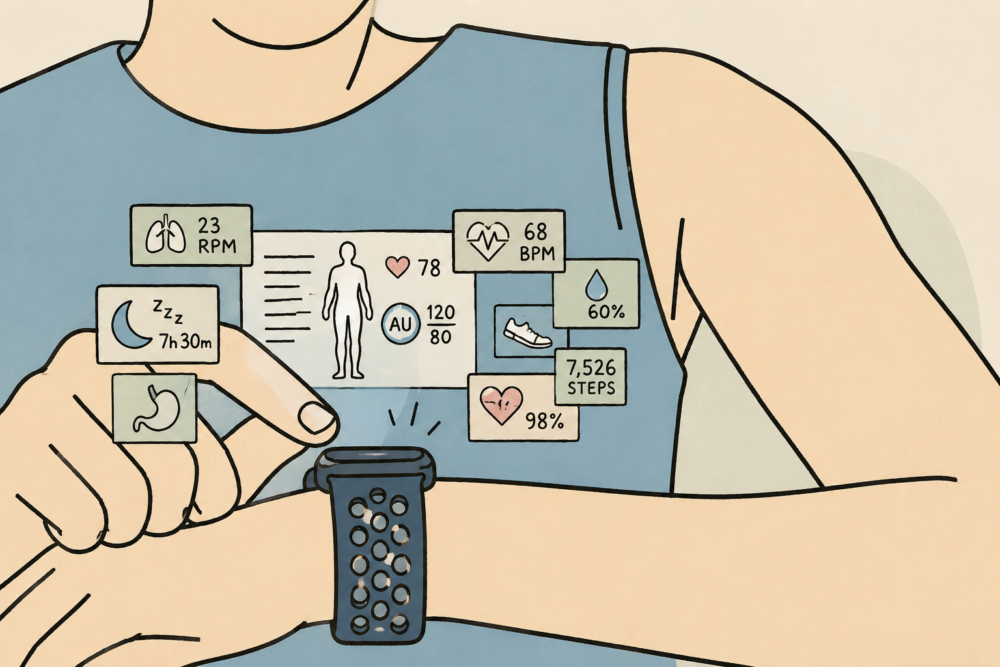
4. Your Body Is Part of Your Trading System
Many traders think they have a psychological problem.
Often, they have a recovery problem.
A trader running on five hours of sleep is far more likely to:
- Overtrade
- Chase losses
- Miss quality setups
- Ignore risk management
That’s not a character flaw.
It’s biology.
Sleep deprivation weakens the brain’s ability to regulate impulses and make rational decisions. What feels like poor discipline is often simply poor recovery.
Before buying another trading course, ask yourself:
“Am I physically capable of making good decisions today?”
Action Step
Treat sleep, exercise, hydration, and nutrition as part of your trading system.
Track your sleep quality alongside your trading performance for thirty days.
You may discover that your best trades have more to do with recovery than strategy.
5. Remove Decisions Before the Market Opens
Most traders think consistency comes from stronger willpower.
In reality, consistency often comes from needing less willpower.
Every decision you make during a trading session creates an opportunity for emotions to interfere.
Should I enter?
Should I add?
Should I hold?
Should I take another trade?
The more decisions you make in real time, the more opportunities you give fear and greed to take control.
Professional traders reduce these decisions in advance.
They rely on rules rather than feelings.
Action Step
Replace intentions with predefined rules.
Instead of:
“I’ll try not to revenge trade.”
Create:
“Maximum three trades per session.”
Instead of:
“I’ll be more disciplined.”
Create:
“Stop trading immediately after hitting my daily loss limit.”
Instead of:
“I’ll stay patient.”
Create:
“No trading during the first fifteen minutes of the session.”
The less you decide in the moment, the more consistent your execution becomes.
Not because you’ve become more disciplined.
Because you’ve designed discipline into your process.
Final Thoughts
Trading is difficult.
Not because clicking a button is difficult.
It’s difficult because uncertainty is difficult.
Taking losses is difficult.
Waiting is difficult.
Doing nothing when everything inside you wants to act may be one of the hardest skills you’ll ever learn.
The traders who last aren’t necessarily smarter or more motivated than everyone else.
They’ve simply built a process that still works on their worst day.
No hacks.
No shortcuts.
No relying on motivation when the market is moving and emotions are running high.
Build the process.
Trust the rules.
Then let consistency take care of itself.