One second too early, you’re stopped out. One second too late, the profit’s gone. Blink, and it’s over. What separates the pros from the gamblers isn’t flashy predictions — it’s precision, patience, and knowing exactly when to pull the trigger.
This isn’t just another trading guide — it’s your survival manual.
Trade Execution: Where the Magic (or Disaster) Happens
Entries and Exits Are Everything. Seriously, this is where it all begins and ends. I can’t tell you how many times I’ve had a brilliant idea for a trade, but my entry point was either too early or too late, and poof! The whole thing went south. Like, I remember eyeing this one tech stock, thinking it was going to pop. I jumped in, but it dipped just a little further before its real move, stopping me out. If I’d just waited for that extra confirmation, I would’ve been riding the wave. On the flip side, getting out is just as crucial. I’ve been guilty of letting greed get the best of me, watching a nice profit dwindle because I wanted “just a little more.” Now, I always try to take partial profits as a trade moves in my favor. It’s like securing a mini-win along the way, and it takes the pressure off.
Only Go for the A+ Setups. This is a big one. My early trading days were full of “meh” trades – you know, the ones where you’re not really convinced, but you just have to be in a trade. What a waste of mental energy and capital! Now, I’m super picky. I’d rather take two or three killer trades a week than ten mediocre ones. It’s about quality over quantity. For instance, I’ll often see dozens of charts, but only a handful truly stand out with clear patterns and good volume. Those are my A+ setups, and that’s where I focus my energy. Less noise, better focus, and yeah, more green in the account.
Don’t Get Fooled by Those Sneaky Fakeouts. I’ve been burned by fakeouts more times than I care to admit. You see a stock breaking out, you get all excited, jump in, and then bam! It reverses and stops you out. I learned to look for confirmation – is the volume there? Is it holding the breakout level? If a breakout happens on low volume or quickly reverses, it smells fishy, and I’ve learned to bail. It’s like that time I saw a stock rip through resistance, but the volume was super weak. My gut told me to wait, and sure enough, it dropped right back down. Saved myself a loss there.
Let the Price Confirm Your Idea, Always. You might have a brilliant theory about why a stock should move, but the market has the final say. I’ve fallen in love with a trade idea, convinced myself it was going to work, only to watch the price action tell a different story. If the stock isn’t moving how I expect, I cut it. No marrying the idea. It’s just a chart, not a lifelong commitment. I remember thinking XYZ Corp. was undervalued, but the stock kept trending down. I finally accepted the market was right and cut my losses.
Be Cool With Waiting on Breakouts. Sometimes, that first push on a breakout is just a tease. The market likes to shake out the weak hands. I’ve learned to wait for that retest of the breakout level. Often, it’ll dip back, scare some people out, and then the real move begins. It takes patience, but it’s worth it.
Trade What You See, Not What You Think. This is a golden rule for me. Forget your opinions about a company, forget the news, forget what your buddy said. If the chart is clean and the setup is there, I trade it. If it’s messy, I pass. Simple as that. I used to get caught up in the “story” of a stock, only to ignore what the price was actually doing. Now, my focus is solely on the price action.
Get Back In If the Setup’s Still Good. Getting stopped out sucks, no doubt. But there’s no shame in it. If the setup is still valid after I’m stopped out, I’ll wait for the next entry. Some of my absolute best trades have been second or even third attempts after being stopped out on the first try. It shows discipline and confidence in your analysis.
Scale Into Winners, Not Losers. This is huge for managing risk and stress. I used to go all-in upfront, which meant every little wiggle in the price felt like a heart attack. Now, I ease in. I’ll take a smaller position to start, and as the trade proves itself and moves in my favor, I’ll add to it. It’s less stressful and way smarter. Never, ever add to a losing position. That’s a surefire way to blow up an account.
Take Profits and Reload Later. Pros do this, and I’ve adopted it. When a trade is working, I’ll take some profits off the table, securing those gains. Then, I’ll ride the rest of the position. If the stock dips, holds support, and the setup is still good, I’ll reload with a stronger position. It’s a way to de-risk while still participating in the bigger move.
When It’s Time, Pull the Trigger. All your analysis, all your waiting, it all comes down to this moment. If a trade checks all your boxes, you have to execute. No hesitation. Overthinking will kill your confidence and often leads to missing out on great opportunities. I’ve had trades where I hesitated for a split second, and boom, the price moved against me, or I missed the optimal entry.
🌊 Adapting to the Market: Ride the Wave, Don’t Fight It
Ride With the Trend. This one’s pretty straightforward. If the market’s in an uptrend, I’m looking for long opportunities. If it’s a downtrend, I’m looking for shorts. Don’t be the hero trying to call the exact top or bottom of a market. I learned this the hard way trying to short a raging bull market – it was painful!
Watch for Distribution. When you see big red candles at the highs, or a stock repeatedly failing to break out above a certain level, it’s a warning sign. Smart money might be quietly selling off their positions. You don’t want to be the person holding the bag when they finally pull the plug.
The Market’s the Boss. You can’t fight the market. If the entire market is in a freefall, going heavy long is just asking for trouble. Play smart, understand the overall market sentiment, and adjust your strategy accordingly. I remember stubbornly holding onto a long position during a broad market sell-off, thinking my stock was “different.” It wasn’t.
Know Why the Stock’s Moving. Catalysts are key. Earnings reports, major news, industry trends – these are the things that drive significant moves. If a stock is pumping without any clear catalyst, it might just be a short-lived speculative pump, and you don’t want to get caught holding it when it crashes.
Price Reaction > Headlines. This is a subtle but critical point. It’s not just the news itself, but how the stock reacts to the news. Good news with no positive price movement can actually be a sign of weakness. Conversely, bad news that the stock shrugs off or even rallies on can indicate underlying strength. I’ve seen stocks drop on fantastic earnings because the “whisper numbers” were even higher.
Peek at the Options Flow. Heavy call buying before a major breakout can be a signal that big institutional players are positioning themselves. It’s not a standalone trading strategy, but it’s definitely something I keep an eye on to get a pulse on what the “big dogs” might be thinking.
Zoom In, Zoom Out. That perfect 5-minute breakout setup might look completely different on the daily chart. Always, always check the bigger picture. A strong short-term move might be running right into a major resistance level on the daily chart. It’s about context.
Respect the Open. The first 30 minutes of trading can be absolute chaos. I either let it settle down before jumping in, or if I’m feeling particularly sharp and see a high-probability setup, I might try to capitalize on that early volatility. But it’s risky, so know your skill level.
If It’s Not Working Anymore, Adjust. Trading strategies aren’t set in stone. The market evolves, and your edge needs to evolve with it. If my favorite setup starts consistently losing money, I take a step back, analyze what’s changed, and tweak my approach. Staying flexible is crucial.
Don’t Force It. If it doesn’t feel right, or if there are no clear setups, walk away. You don’t have to trade every day. Cash is a perfectly valid position, and sometimes, sitting on the sidelines is the smartest thing you can do.
💸 Risk Management: Protect Your Capital
Know Your Risk Before You Click. This is non-negotiable. Before I even think about entering a trade, I know exactly where my stop-loss will be if I’m wrong. No stop-loss means no discipline, and that’s a recipe for disaster.
Keep Risk Per Trade Consistent. I used to size up on trades where I had “a really good feeling.” Big mistake. Never risk more than your predefined amount, regardless of how confident you feel. Stick to your rules.
Stick to the 2% Rule (or whatever your rule is). I personally try to never risk more than 1-2% of my total trading capital on any single trade. This means if I have a $10,000 account, I’m not risking more than $100-$200 per trade. It’s about survival. You want to be able to trade another day, even after a string of losses.
Place Smart Stops. Don’t just put your stop-loss at a random number. Use technical levels like support, resistance, moving averages, or even Average True Range (ATR) to place your stops logically. It gives your trade room to breathe but cuts it when the thesis is broken.
Trail Stops as You Go. Once a trade moves in my favor, I start trailing my stop. This locks in gains as the price moves up. But don’t strangle the trade too early! Give it a little room to breathe before moving your stop too tightly.
Never Average Down. Repeat after me: “I will not average down.” Adding to a losing position is one of the quickest ways to blow up your account. If you’re wrong, cut it. Don’t throw good money after bad.
Set a Max Daily Loss Limit. This is a hard stop for me. If I hit my predefined maximum daily loss, I’m done trading for the day. No exceptions. It prevents me from going on tilt and making emotional, impulsive decisions to try and “make it back.”
Protect Green Trades. Once a trade is profitable, I immediately move my stop to at least breakeven, or take a partial profit. The goal is to never let a winning trade turn into a losing one.
Cut Fast, No Regrets. If a trade isn’t working, I’m out. No “hoping” it comes back. Hope is not a strategy in trading. Cut your losses quickly and move on.
Accept Losses Like a Pro. Losses are part of the game. Every single trader, even the best, takes losses. The difference between successful traders and unsuccessful ones is how they manage those losses. Take ’em, learn from them, and move on. Don’t let them derail your confidence.
🧠 Psych Game: Where Trades Are Won (or Lost)
Check Your Emotions at the Door. Fear and greed are your worst enemies in trading. Leave them out. A neutral, objective mindset is crucial for clean execution. I’ve made so many dumb mistakes because I was either afraid of missing out or too greedy to take profits.
Stop Chasing. Missed a trade? Let it go. Jumping in late, especially after a big move, usually ends in tears. There will always be another opportunity.
Step Back After Big Swings. Whether you have a huge win or a big loss, take a break. Walk away from the screen, clear your head, and reset. Don’t let the emotion of the moment cloud your judgment.
Don’t Overtrade. More trades do not equal more profits. In fact, it’s usually the opposite. Be picky, conserve your mental energy, and protect your capital.
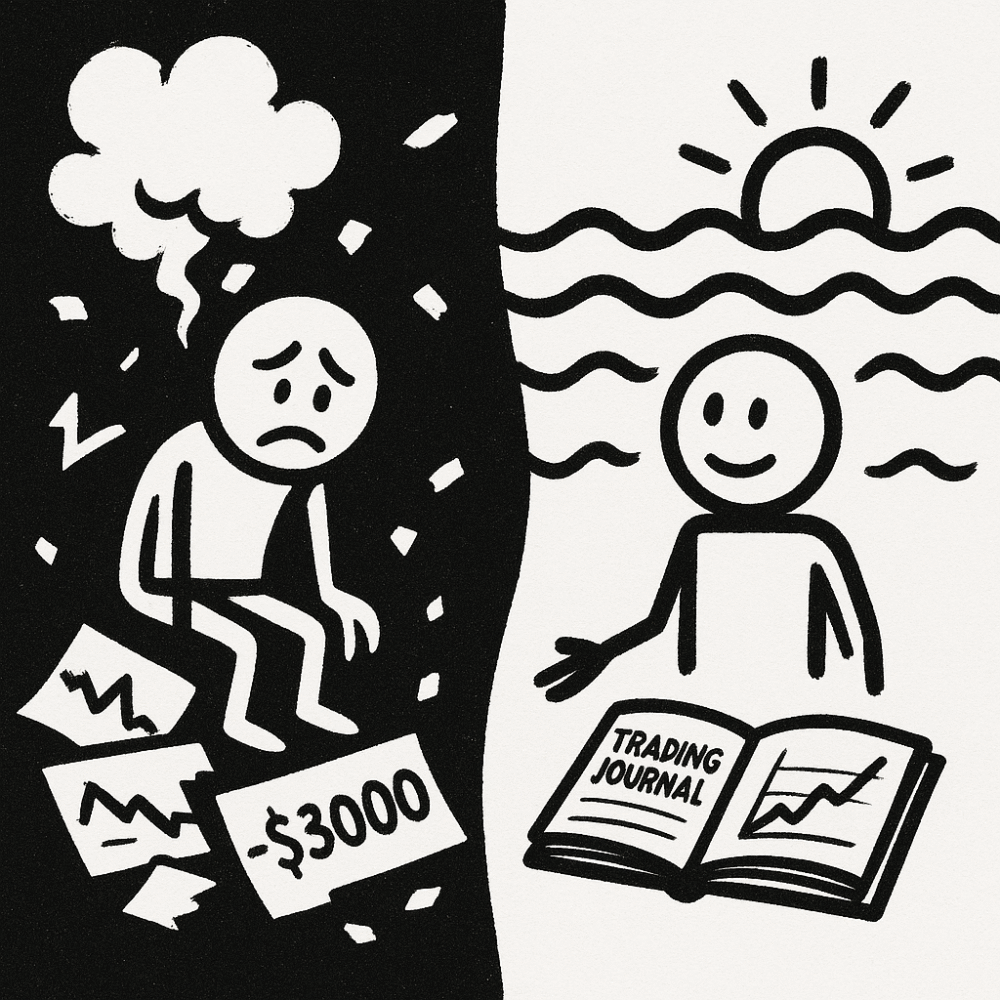
Track Everything You Do. This is so, so important. I journal every single trade. I write down why I took it, what went right, what went wrong, my emotional state. Asimple spreadsheet or notebook works. Just do it. It’s how you learn and improve.
Detach From the Money. It’s easy to get fixated on the dollar amount, but that can lead to emotional decisions. Focus on making solid decisions based on your strategy and risk management. The money will follow if you consistently execute your plan.
Embrace the Unknown. Nothing in trading is guaranteed. You’re dealing with probabilities. You just need a slight edge and solid discipline. Accept that some trades will lose, even with the best setups.
Have a Morning Routine. Before the market even opens, I’m prepped. I’ve checked the news, reviewed my watchlist, identified key levels, and planned my trades. Don’t just roll out of bed and YOLO into trades. Preparation is key.
Hide the P&L Mid-Trade. Watching those profit and loss numbers bounce up and down during a trade can be a huge distraction and lead to premature exits or holding on too long. Trust your setup and manage your risk. I often hide my P&L until the trade is closed.
Run Your Own Race. Seriously, forget what Trader X on Tik Tok is posting about their massive gains. Everyone’s journey is different. Focus on your own progress, your own learning, and improving your unique trading style.
🔧 Refining Your Strategy: Always Be Evolving
Only Take High-Conviction Trades. If it’s not a “hell yes” setup, it’s a “no.” B+ setups just waste your mental capital and often lead to frustrating outcomes. Wait for those clear, undeniable opportunities.
Backtest Everything. Never go live with a trading idea based on a guess. Test it. Go back through historical data and see how your strategy would have performed. This builds conviction and helps you identify your edge.
Tweak Your Strategy as Needed. Markets are dynamic. What worked last year might not work this year. Stay nimble, review your results regularly, and be willing to tweak your strategy to adapt to changing market conditions.
Blend Technicals With Fundamentals. I find that technical analysis gives me my entry and exit points, but a basic understanding of the company’s fundamentals (like recent earnings or news) gives me more confidence in the trade’s potential. It’s like having two pieces of the puzzle that fit together.
Tighten Your Watchlist. Too many tickers can lead to analysis paralysis and missed opportunities. Focus on a few high-quality names that you understand well and that exhibit the setups you’re looking for.
Always Use Multi-Timeframe Confirmation. This is huge. That perfect 5-minute breakout looks even better if it’s also a breakout on the 15-minute and 1-hour charts. Aligning your short-term and long-term views gives your trade much stronger conviction.
It’s Okay to Sit Out. If nothing is setting up according to your plan, don’t force a trade. Sit on your hands, wait for better odds, and protect your capital.
Do Weekly Reviews. Every weekend, I take time to review all my trades from the past week. What went well? What didn’t? What did I learn? This self-analysis is how you level up your game.
Stay Informed. Keep an eye on key news events, economic data, and sector trends. It helps you anticipate market movements rather than just reacting to them.
Never Stop Learning. The moment you think you’ve “figured it out” is the moment the market will humble you. Read books, review your trades, test new ideas, and constantly strive to improve. The market is an ever-evolving beast, and you need to evolve with it.


