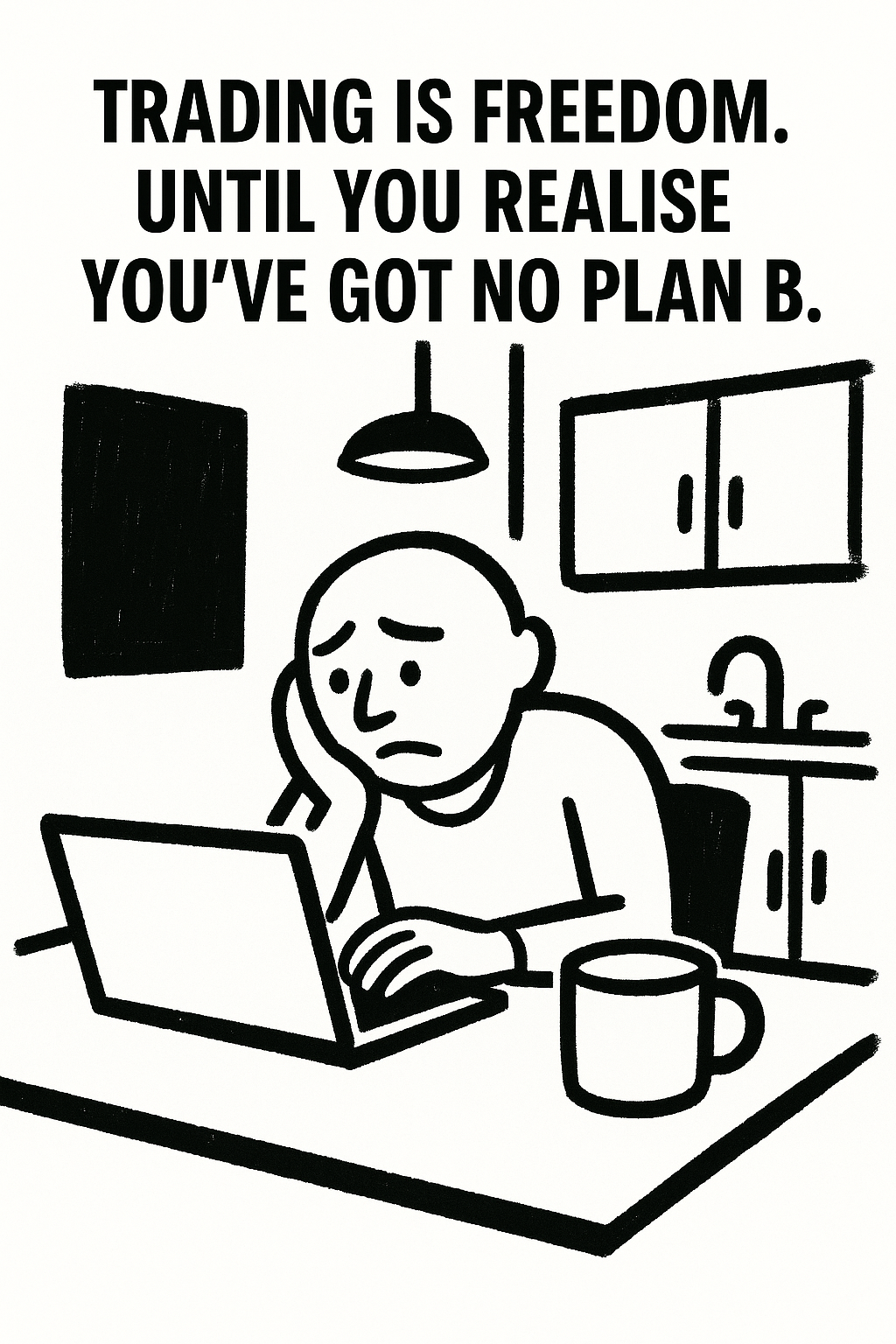
In trading, everyone talks about risk management, discipline, and psychology. But here’s the truth: none of that matters if your personal values aren’t in the right place.
You can wake up at 6 AM, study the markets for hours, and have the fastest execution setup—and still blow up your account if your values are misaligned. Why? Because without the right personal values, discipline turns into obsession, and ambition turns into self-destruction.
Let’s explore how your values shape not just your trading results, but the kind of trader—and person—you become.
Why Personal Values Matter More Than Wins and Losses
Plenty of traders have incredible discipline. They stick to routines, journal their trades, and execute with precision. But if their core beliefs are toxic—like “I must win every trade” or “I need to get rich quick”—they’re doomed.
This is classic trading psychology. When your values system prioritizes greed or ego over consistency and patience, you end up chasing setups, falling into FOMO trading, and eventually blowing up accounts.
That’s the lesson: success isn’t just about skill—it’s about values. Personal values define what success even means.
For one trader, success means financial freedom and steady compounding.
For another, it’s the adrenaline of high-risk bets.
For someone else, it’s independence—living life on their own terms.
Your strategy should reflect your life values, not the other way around.
You Trade What You Value
Every trade you take is a reflection of your personal values.
When you cut a loss quickly, you’re valuing discipline over ego.
When you let a winner run, you’re valuing patience over fear.
When you chase trades after a red day, you’re valuing excitement or revenge trading over consistency.
Here’s the problem: traders often say they value one thing but act on another.
You say you value risk management, but you widen stops every time price moves against you.
You say you trade for freedom, but you’re glued to the screen 12 hours a day.
You say you want consistency, but you double position size to “make back losses.”
Actions don’t lie. This mismatch creates the “trader’s value disconnect.” And that disconnect is the root cause of most psychological barriers—overtrading, panic selling, and FOMO trading.
You Are What You Value
When traders blow up accounts and step away for a while, they often return saying they’ve “reset” or “found themselves.” What they really did was re-evaluate their personal values.
Trading isn’t just about money—it’s about identity.
If you value money above all, you’ll overtrade and panic sell.
If you value learning, every loss is tuition.
If you value freedom, you’ll create a trading style that balances life and markets.
Any change in trader identity comes from a shift in values. When values shift, trading behaviors change.
Good Trader Values vs Bad Trader Values
Not all personal values are created equal. In trading, they can make or break your career.
Good values are evidence-based, constructive, and controllable.
Bad values are emotion-based, destructive, and uncontrollable.
Evidence vs Emotion
Trading based on fear and greed is emotional trading—it’s destructive. Good values like discipline, patience, and risk management are grounded in evidence and repeatable process.
Constructive vs Destructive
Some values build you, others tear you down. Journaling builds awareness. Sticking to risk rules protects your account. Bad values—like chasing excitement or needing to prove yourself—lead to emotional trading mistakes such as revenge trading.
Controllable vs Uncontrollable
Markets are uncontrollable. But your entries, exits, and mindset are. If your values are built on outcomes like “being right every time,” frustration is guaranteed. If they’re built on controllable actions like following a trading plan, you stay steady no matter what.
Examples of good values for traders: patience, consistency, self-awareness, risk management, continuous learning.
Examples of bad values: greed, ego, FOMO trading, revenge trading, chasing status.
Redefining Success Through Personal Values
Most traders define success as “green = good, red = bad.” But this narrow view is dangerous. If profit and loss are your only values, you’ll ride an emotional rollercoaster with every trade.
Redefine success through healthier personal values:
Did I follow my plan today?
Did I manage risk properly?
Did I avoid overtrading?
Did I stay patient and disciplined?
When you value the process over profits, trading discipline ensures long-term success.
Related Reading 📚
Trading Psychology – Why your mindset shapes every trade.
Risk Management – The most important value a trader can have.
FOMO Trading – How to stop chasing setups that aren’t there.
Revenge Trading – Why trading angry always backfires.
Trading Discipline – The habit that separates winners from losers.
Final Thoughts
At the end of the day, personal values shape everything about your trading journey. They guide how you handle losses, how you define success, and whether you last in the game.
Bad values make you a gambler. Good values make you a trader.
So before adding another indicator or chasing another setup, ask: What do I truly value in trading and in life?
Because if your values are wrong, no strategy will save you. But if your values are right, no setback can stop you.
FAQ: Personal Values in Trading
What are personal values in trading?
Personal values in trading are the beliefs and priorities that guide your actions. They include discipline, patience, risk management, and consistency.
What are good personal values for traders?
Good values are evidence-based and controllable. Examples include journaling, risk management, patience, and focusing on process over profits.
What are bad personal values in trading?
Bad values are emotion-driven, destructive, or outside your control—like greed, ego, FOMO trading, or revenge trading.
How can I develop better personal values as a trader?
Focus on process instead of outcomes. Journal your trades, manage risk, and build discipline. Over time, you’ll shift toward healthier values.