More than 80% of traders quit within their first two years of trading. Not because they lack passion. Not because the market is unbeatable. But because they stop learning.
They repeat the same mistakes until their accounts bleed out. They think one winning streak means they’ve “figured it out.” And then the market crushes them.
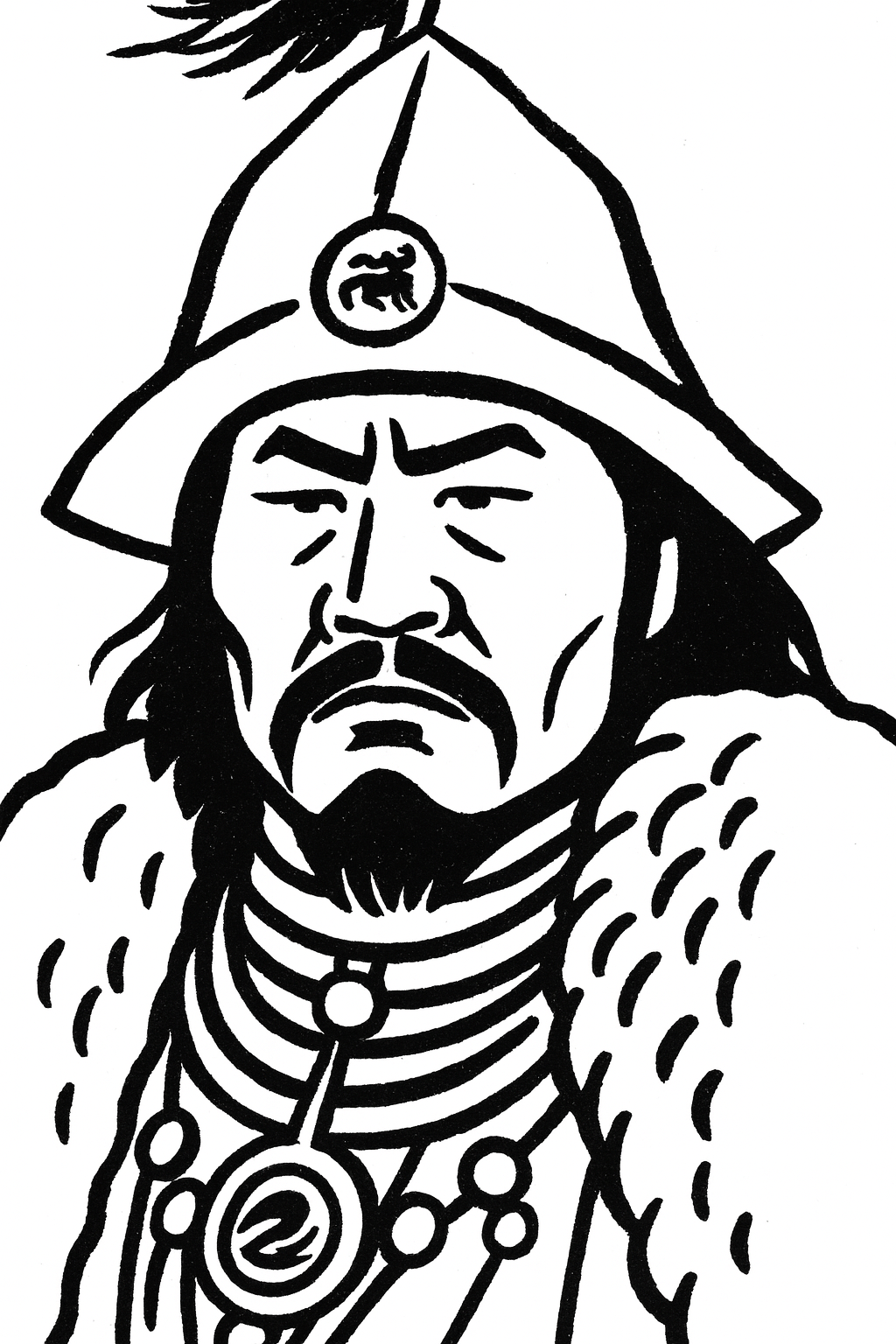
Genghis Khan faced the same trap on the battlefield. He wasn’t just a barbarian warlord—he was history’s most systematic learner. Every defeat became a lesson. Every enemy is a teacher. Every conquest is a case study. That single habit transformed an outcast nomad into the builder of history’s largest empire.
And for traders, the principle is the same: relentless learning is what separates blown accounts from financial freedom.
Borrow Brilliance: The Decimal System
Khan’s army was legendary for its efficiency. But he didn’t invent the system. He borrowed it—organizing his men in units of 10, 100, 1,000, and 10,000 from neighboring tribes.
Trading application: You don’t need to invent your own risk framework. Borrow what already works:
- 1–2R daily loss caps.
- Risking 1% per trade.
- Journaling structures from funded traders.
👉 Lesson: In both empires and markets, ego kills. Pragmatism wins.
Turn Weakness Into Strength: Siege Warfare
Khan’s cavalry ruled the open steppes, but walled cities wrecked him. Instead of avoiding the problem, he studied his enemies, captured engineers, and mastered siege warfare—turning a weakness into a strength.
Trading application: Your “walled city” might be:
- Chop that kills your trend setups.
- Revenge trades after news events.
- Overtrading late in the session.
Most traders avoid their weaknesses. Winners dissect them.
👉 Lesson: Your drawdowns are tuition payments. Don’t waste the course.
Recruit Expertise: Administration
Khan conquered, but he couldn’t govern alone. He recruited administrators, scholars, and engineers from every culture he absorbed. His empire evolved into a vast knowledge network spanning from China to Europe.
Trading application: Don’t trade in isolation. Recruit expertise through:
- Mentors who challenge your blind spots.
- Communities that share live lessons.
- Tools that track your performance with ruthless honesty.
👉 Lesson: Traders who go solo burn out. Traders who build networks compound.
A Real Example: Mark the Trader
Take Mark, a futures trader who has been stuck in three years of frustration. He blamed the market—until he took a page from Khan’s playbook.
He began journaling systematically, reviewing every trade weekly, and treating losses as opportunities for learning and growth, rather than setbacks. Within six months:
- He cut revenge trades by 70%.
- His win rate nudged from 45% to 52%.
- Most importantly, he passed a prop firm evaluation and held the account.
Like Khan, Mark didn’t rely on raw power. He built an edge by learning systematically.
Ego: The Silent Empire-Killer
Khan knew ego kills learning. Success whispers lies: “You’ve figured it out. You’re above this. You can coast.”
Physicist John Wheeler said it best: “As our island of knowledge grows, so does the shoreline of our ignorance.”
Trading application: The market punishes arrogance faster than any opponent Khan ever faced. The traders who survived are always students.
👉 Lesson: Write this before tomorrow’s open: “I am still a student of the market.”
Build Your Trading Empire
Khan’s empire eventually crumbled, but his methodology of learning remains undefeated. For traders, this is the blueprint:
- Borrow brilliance → adopt proven risk rules.
- Turn weakness into strength → study kryptonite trades.
- Recruit expertise → surround yourself with mentors and tools.
- Compound lessons → journal daily.
- Kill ego → stay curious forever.
Commit to this, and systematic learning can do for your trading career what it did for Khan’s empire: turn scattered battles into lasting dominance.
Your move: Open your journal today and answer—What lesson did the market just teach me that I haven’t written down yet?
That’s how you build your empire—one trade, one lesson, one edge at a time.
FAQ
Q1: What is systematic learning in trading?
A1: Systematic learning in trading means treating every trade as a lesson. Traders log their wins and losses, review their performance, study patterns, and adjust their rules. It’s the process of consistently refining strategies instead of repeating mistakes.
Q2: Why is systematic learning important for traders?
A2: More than 80% of traders quit within two years, often because they stop learning. Systematic learning helps traders build discipline, reduce emotional mistakes, and create a repeatable edge—turning trading from a gamble into a long-term career.
Q3: How can a trader apply systematic learning daily?
A3: Start with small habits: journaling trades, replaying charts, writing a lesson from each session, and reviewing weaknesses weekly. Over time, these lessons compound into consistent performance and confidence.
Q4: Can systematic learning really lead to financial freedom?
A4: Yes. Traders who apply systematic learning build consistency—the key to scaling accounts, passing prop firm evaluations, and eventually achieving financial freedom. It’s not about one big win, but about compounding lessons day after day.


