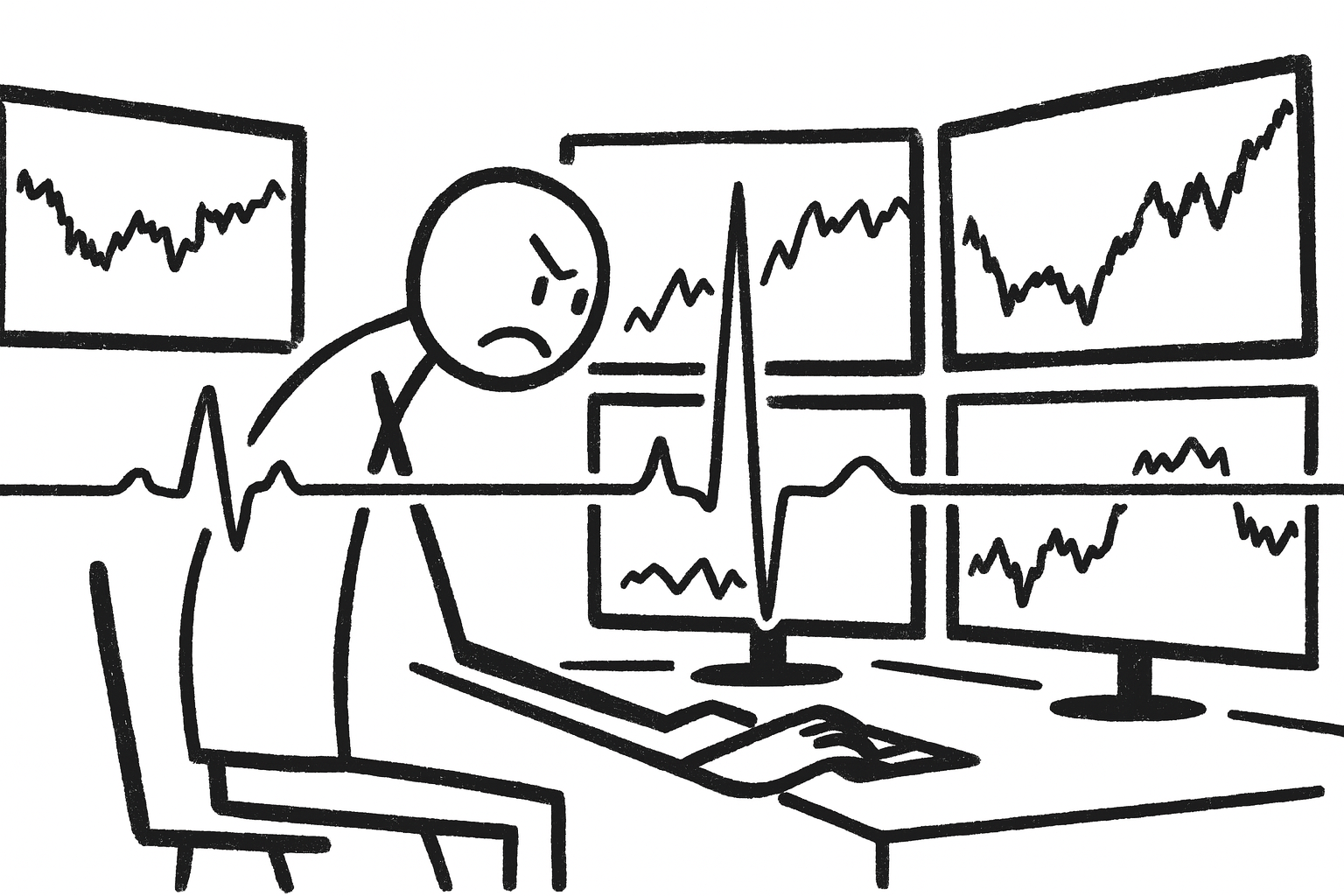
If you’ve just stepped from paper trading into live markets, you might be wondering: Am I supposed to feel this way? The short answer is yes — the nerves, the racing heart, the haunting of missed profits, it’s all part of the transition.
Paper vs. Live: Simulator vs. Real Car
Think of paper trading like a simulator. It teaches you mechanics, but it doesn’t prepare you for the real car experience of live trading.
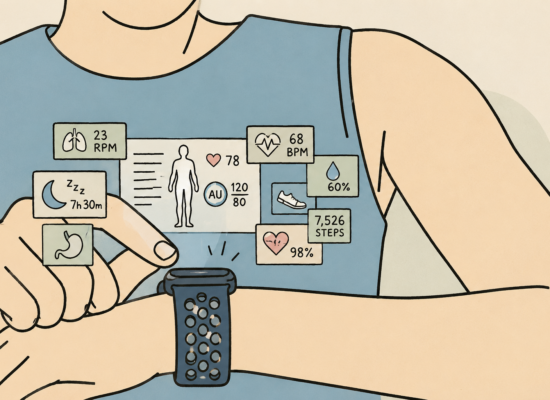
When actual money is at risk, your body interprets every tick as a matter of survival. That physiological response — shallow breath, racing heart — isn’t weakness, it’s hardwired instinct. And no amount of paper trading can fully replicate it.
Live trading isn’t just about charts; it’s about discovering how you react under genuine pressure.
Why Emotions Spike in Week One
The first week exposes the brutal truth: emotions never go away. They transform, but they’re always there.
The real goal isn’t to become emotionless. It’s to become a disciplined executor of a proven system. Fear, greed, and regret will always whisper in your ear. The question is: will you let them drive your decisions, or will you follow your plan anyway?
Traders who journal their emotions, meditate, and review their decision-making process tend to adapt more quickly. But make no mistake — the discomfort is tuition. Every trader pays it.
Rookie Mistakes That Wreck Accounts
The first week often feels like a confession booth. Nearly every trader makes these mistakes:
- Letting winners turn into losers. You were up $80; you wanted more, then you turned red. Classic.
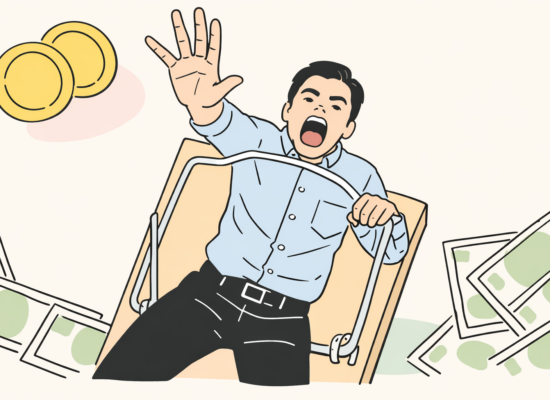
- Averaging down losers. “Hope” is not a strategy; it’s an account killer.
- Abandoning the plan. Greed, fear, or impatience kicks in, and the rules vanish.
- Trading is too large. If you feel genuine fear or euphoria, your size is almost certainly too big. A simple rule: if a loss would ruin your week, you’re over-leveraged.
These mistakes aren’t just common — they’re predictable. And they’re avoidable if you keep size small and stick to the plan.
Position Sizing: The Antidote to Fear and Euphoria
Position sizing is the trader’s pressure valve.
If a single loss ruins your week, you’re trading too big. The smaller your size, the easier it is to stick to your plan without panic or overconfidence.
Rule of thumb: size down until losing a trade feels uncomfortable, but not catastrophic. Learn more in our guide on position sizing for beginner traders.
Risk Management Rules: Professional Standards
Even with a great system, you’ll fail without risk management.
- Professionals risk 1–2% of account equity per trade.
- Set daily loss limits (2–3 losers max) and respect session cutoffs.
- Small risk per trade gives your edge time to play out.
For more background, read Investopedia’s primer on risk management.
System Beats Emotion — But Risk Management Rules All
Here’s the truth: emotions aren’t the problem. Weak systems and poor risk management are.
A strong system gives you robotic, rules-based exits. Example framework for SPY options:
- Lock stop at +3% once hit 7% profit
- Set profit at +50%
However, even a great system can’t save you if you’re taking too many risks. Professional traders rarely risk more than 1–2% of their account on a single trade. Ignore this rule, and you’ll blow up before your edge has a chance to take effect.
SPY Options vs. Futures: The Real Debate
Why futures are simpler: directional play, no theta or IV. Learn more from the CME Group’s futures education center.
Why SPY options can be safer: defined maximum loss, lower entry cost. A beginner-friendly overview is available at the Options Clearing Corporation’s education site.
The Missing Pieces Beginners Overlook
- Backtesting and forward testing. Before you risk real money, you should know how your system performs historically and in current markets.
- Detailed record-keeping. Track everything — entries, exits, context, emotions. Data beats intuition every time.
- Market context. Jumping into high-volatility events (earnings, Fed days) as a beginner is like learning to drive in a blizzard. Pick your spots.
Your First 100 Live Trades: A Playbook
- Trade smaller than you think you should.
- Stick to your process religiously.
- Risk no more than 1–2% per trade.
- Journal everything: what you did, how you felt, what the market did.
- Review 20-trade batches before making changes.
This is how you survive the emotional storm and slowly build discipline.
The Bottom Line
The transition to live trading will feel uncomfortable — and that’s precisely how it should feel. The fear is proof you’re in the game.
The traders who survive aren’t the ones who eliminate emotion. They’re the ones who execute their plan despite emotion.
So if you’re in your first week and feel like you can’t breathe, take heart. Every successful trader has been exactly where you are. Your job now is simple: start small, follow your process, and remember that consistency is built trade by trade, screen by screen.
That discomfort? It’s your tuition. Pay it, learn from it, and keep going.
Frequently Asked Questions
Q1: Do nerves ever go away?
They never vanish, but proper sizing and a strong system make them manageable.
Q2: How much should I risk per trade?
Professionals cap risk at 1–2% of the account per trade. New traders should start even smaller.
Q3: Are futures or options better for beginners?
Futures are mechanically simpler. Options can be safer if you understand Greeks and stick to defined risk.
Q4: How do I know if my system works?
Backtest it on historical data, forward test it in current markets, and keep detailed trade records before scaling up.
Q5: Is paper trading useless?
It’s useful for mechanics and testing setups. However, emotional conditioning only develops through live trading.