Most people want the same thing:
- A high-paying job
- Plenty of free time
- A nice car and home
- Regular vacations
- And zero stress
It’s a fantasy. Real life doesn’t work that way.
High-paying jobs are rare—and the best ones demand your time and energy. Even if you succeed, life still throws surprises your way: taxes, bills, health issues, and family needs.
No one has the perfect life—not even those who seem to.
So the real question isn’t: “How do I get everything I want?”
It’s: “When life gets hard, do I fall apart—or adapt?”
The Hidden Trap
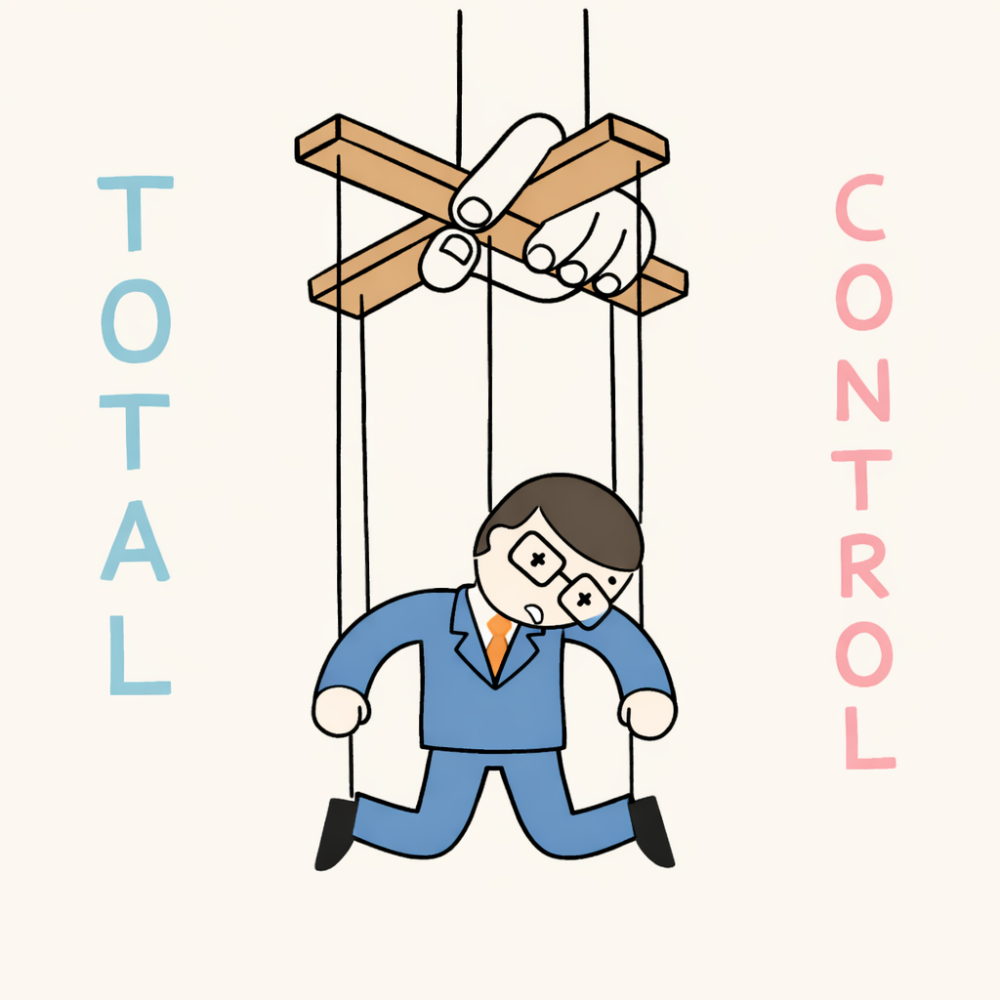
People don’t break because they’re weak. They break because they believe life should be controllable.
If you think you should be able to control outcomes, then every delay feels like failure. Every uncertainty feels like danger.
This is why trading appeals to some people—not just risk-takers, but those chasing a specific fantasy: control without permission.
At a job, you need approval from bosses. In business, you depend on customers and markets. But trading whispers: “You don’t need anyone. Press a button. Get paid today.”
That promise is powerful—especially when you feel trapped.
When Action Fails
Last year, I faced a stress I couldn’t fix with action.
My wife was on a student visa. We needed her to obtain a permanent visa to stay.
We gathered documents, submitted forms—and then waited.
No updates. No timeline. Just silence.
I’m used to solving problems fast:
- Don’t like my job? Find a new one.
- Out of shape? Start running.
- Bad trade? Exit and move on.
But the visa process didn’t care about effort or urgency. It just unfolded on its own schedule.
I caught myself doing what traders do in a losing streak:
- Checking for updates constantly
- Imagining worst-case scenarios
- Trying to “think” my way out of uncertainty
None of it helped. It only made the wait heavier.
That’s when it hit me:
Life and markets punish the same weakness—not lack of skill, but the need for control.
The Real Skill
Most trading advice focuses on technique: better entries, risk management, and journaling. All useful.
But technique isn’t what breaks people.
What breaks them is temperament—the ability to stay calm when you can’t control the outcome.
Temperament isn’t a personality trait. It’s a skill. A muscle you build by practising patience in uncertainty.
The ancient philosopher Epictetus put it simply:
“When I see someone anxious, I ask: What do they want that isn’t theirs to control?“
Anxiety isn’t random. It’s a sign you’re demanding certainty from an uncertain world.
A losing trade hurts not just because of the money lost, but because it shatters the fantasy that effort always yields results.
How Things Actually Work
After two years of searching, we finally found our dream home.
It didn’t happen because we forced it. Or “manifested” it.
It happened because:
- We did the right work
- We stayed patient
- And timing arrived when it was ready
Most of what I worried about turned out fine. Most of my suffering came from trying to live in the future—treating uncertainty like an emergency.
But uncertainty isn’t an emergency. It’s normal.
Markets are uncertain. Health is uncertain. Careers are uncertain.
Trading tricks you into thinking otherwise—because you have a button to press. Buttons make us feel powerful.
Until the market reminds you: you’re not in control.
The Truth
Every trader learns this:
Your edge isn’t just your strategy.
Your edge is staying calm while the outcome is unknown.
Just staying steady in a world that won’t be tamed.
And here’s the irony:
The more comfortable you are with uncertainty in life,
The less power the market has to shake you.
Because handling an unexpected visa delay or a losing trade… requires the same skill.
Most people never train it. They just try harder to control the uncontrollable—until life or the market sends another reminder:
You were practising panic, not patience.