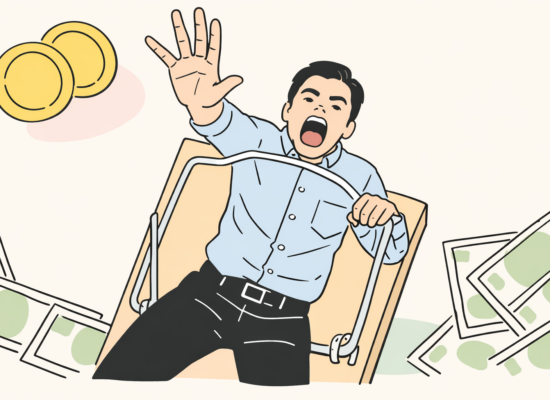
If you’re trading with a prop firm or aiming to pass a funded challenge, one concept can determine your success or failure: drawdown.
Drawdowns measure how much your trading account drops from a peak to a low. Prop firms use them to protect their capital and to test whether you can trade with consistency and discipline.
In this guide, we’ll cover everything you need to know about trailing drawdown:
- Difference between static drawdown and trailing drawdown
- How trailing drawdown works (with real examples)
- Types: End-of-Day vs Intraday
- Why it matters for funded traders
- 5 practical strategies to avoid breaching your limits
- How prop firms apply drawdown rules differently
By the end, you’ll understand how to stay funded, protect profits, and trade with confidence.
What Is Drawdown in Prop Trading?
At its core, a drawdown is the decline in your account balance or equity during a losing streak. It’s a risk management tool that shows:
- How close you are to violating your firm’s rules
- Whether your trading strategy is sustainable
- How disciplined you are with risk
Types of Drawdowns in Prop Firms
Not all drawdowns are the same. Here are the most common ones:
1. Static (Absolute / Fixed) Drawdown
- Fixed amount you can lose from your starting balance
- Never moves, no matter how high your profits go
📌 Example:
$100,000 account with 10% static drawdown → stop-out at $90,000.
2. Trailing (Relative / Smart) Drawdown
- Moves upward as profits increase
- Never moves back down with losses
📌 Formula:
Trailing Drawdown = Highest Balance – Allowed Loss
📌 Example:
$100,000 account, 10% trailing drawdown.
- Balance grows to $106,000 → Stop-out = $96,000.
- If account falls below $96,000, you fail.
3. Balance-Based Drawdown
- Uses closed trades only.
- Floating profits/losses don’t move the drawdown.
4. Equity-Based Drawdown
- Includes floating profits.
- Stop-out adjusts in real time to your highest equity.
- Very strict, and often catches traders off guard.
📌 Example:
$100,000 account with 5% daily limit.
- Equity rises to $105,000 → Stop-out = $100,000.
- If floating profits vanish, you breach even without closing trades.
🚩 Red flag: Avoid equity-based rules if you’re new.
5. Daily Drawdown
- Max you can lose in a single day (often 5%).
📌 Example:
$100,000 account, 5% daily drawdown.
Start-of-day = $106,000 → Stop-out = $101,000.
Trailing Drawdown Explained
Static vs Trailing Drawdown
- Static: Fixed, never changes.
- Trailing: Moves up with profits, never moves down.
📌 Example:
BluSky Static Growth Plan → static drawdown fixed at $5,000 for the 300k evaluation phase.
Tradeify’s instant funded accounts → Trailing max drawdown $6,000 for 150k account.
How Trailing Drawdown Works
Imagine you start with $10,000 and a 10% trailing drawdown ($1,000).
- Balance grows to $11,500.
- New stop-out = $10,500.
- If the balance falls below $10,500 at any time, the account is breached.
This rule protects the firm and forces traders to grow accounts steadily without taking on reckless risk.
Types of Trailing Drawdown
- End-of-Day (EOD)
- Updates once per day, based on closed profits.
- Safer for swing traders.
- Intraday (Real-Time)
- Updates instantly, based on equity (including floating profits).
- Risk: A pullback from unrealised gains can disqualify you.
Why Trailing Drawdown Matters
Trailing drawdowns are designed to:
- Enforce discipline
- Punish overleveraging and emotional swings
- Separate gamblers from consistent traders
- Lock in profits as you grow
Done right, they make you a better trader.
5 Practical Strategies to Master Trailing Drawdown
- Know Your Firm’s Rules
- Is it balance-based or equity-based?
- EOD or intraday?
- Avoid Big Lot Sizes Early
- Don’t push your trailing stop higher before you’ve built a cushion.
- Lock In Profits Early
- Especially important for intraday rules.
- Think of it like “saving your progress.”
- Avoid Volatile Sessions
- News spikes can wipe out floating profits.
- Grow Gradually
- Aim for small, repeatable wins.
- A slow grind beats one risky home run.
Benefits of Trailing Drawdown
- Encourages consistent growth
- Protects the firm and trader from large losses
- Locks in profit milestones
- Builds accountability and discipline
Challenges of Trailing Drawdown
- Limited recovery room after losses
- High pressure in volatile markets
- Complex rules across firms
- Doesn’t suit aggressive, high-risk strategies
How to Manage Trailing Drawdown Effectively
Risk Management Tips
- Set daily loss caps (e.g., 2%)
- Diversify positions
- Use stop-loss orders
- Track performance metrics
- Avoid overleveraging
Practical Habits
- Plan trades ahead
- Stick to proven strategies
- Adjust the size as the cushion shrinks
- Watch emotional triggers
- Review and learn from losses
Conclusion: Trailing Drawdown Is a Test, Not a Trap
Trailing drawdown isn’t your enemy. It’s a discipline test.
It rewards consistency, punishes recklessness, and ensures only skilled traders get funded.
If you want to pass your next prop firm challenge:
- Understand the rules
- Manage your risk
- Trade consistently
Do this, and you’ll not just pass — you’ll stay funded.
Frequently Asked Questions
Q: What is a trailing drawdown?
A dynamic loss limit that rises with profits but never decreases with losses.
Q: Why is it important?
It enforces discipline, locks in profits, and protects the firm’s capital.
Q: Are all prop firm rules the same?
No. Some use balance-based approaches, while others use equity-based approaches, with different thresholds.
Q: What challenges does it create?
Volatility pressure, limited recovery room, and strict rules for riskier strategies.
Q: How do I manage trailing drawdown?
Use stop-losses, diversify your trades, set daily risk caps, avoid overleveraging, and stay disciplined.