Traders lose money in many ways—through bad entries, exits, or position sizes, or just bad luck. But the costliest losses don’t start with the market. They start with your identity.
I learned this the hard way.
When the Market Changed Me
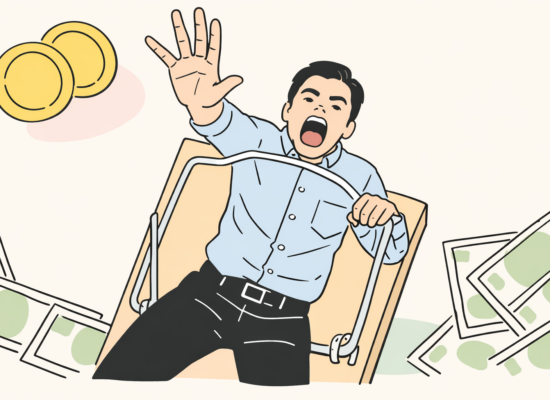
I took a clean trade with a clear plan. Then the price slowly moved against me—not fast enough to be obviously wrong, just slow enough to feel frustrating.
As the loss grew, something shifted inside me.
The calm trader who entered the trade disappeared. In his place was someone trying to win back pride, prove himself, and make the market “pay” for making him feel stupid.
The Market Moves More Than Price
Trading can make you feel like a genius or a failure in minutes—not because your skill changed, but because your sense of self did.
One winning day: “I’ve got this.”
One losing day: “I’m not cut out for this.”
Same person. Same system. Different story.
The market doesn’t just move price—it moves your sense of self. And if you don’t notice that, you’re not really trading the market. You’re trading your self-image.
Thoughts Are Not Facts
Your chart shows candlesticks. Your mind prints meaning.
“I’m falling behind.”
“I ruined everything.”
“I’m not good enough.”
Most traders treat these thoughts like truth. But a thought is just a passing event in your awareness—like a weather alert. The danger comes when you merge with it:
Not “I’m having the thought that I’m not good enough”
But “I am not good enough.”
That is where trouble begins. Now you’re not just feeling a loss—you’re feeling like a failure. And to escape that pain, traders revenge-trade, oversize, break rules, or hold losers too long.
Not because they’re irrational—but because the mind would rather lose money than face the thought: “Maybe I’m not who I thought I was.”
The Real Blowups Happen After Wins
Biggest losses often follow winning streaks—not losing ones.
Why? Winning inflates the ego. And an inflated ego is fragile.
So when the first loss hits after a winning streak, it doesn’t feel like a normal loss. It feels like an attack on you. Not your strategy—your identity.
Now you’re not trading. You’re defending your self-worth. And that’s when discipline vanishes.
Two Traders, One Loss
Two traders take the exact same loss.
One shrugs, logs it, and moves on.
The other spirals for days trying to “get it back.”
Same loss. Different values.
The second trader didn’t just lose money—he lost his image of himself as “the one who finally figured it out.” And when that image cracks, the mind panics.
The One Constant: The Observer
Right now, as you read this, something in you is simply aware.
Not your thoughts.
Not your mood.
Not your story about yourself.
Just the quiet presence noticing the screen, your body, your emotions.
That awareness never leaves. It doesn’t rise and fall with your P&L. Your account can swing. Your confidence can crash. But the one who notices it all stays steady.
You are not your thoughts. You are the space they appear in.
One Simple Practice
Before a bad decision—revenge trading, doubling size, forcing a trade—pause and say out loud:
“Right now, a part of me is feeling ______.”
(Angry. Embarrassed. Small. Panicked.)
That’s it. Just name the feeling.
The moment you say “a part of me,” you’ve stepped back into the observer. You’re no longer possessed by the emotion. You’re back in the driver’s seat.
You can still lose money. But you’re far less likely to lose yourself.
The Real Edge
The real edge in trading isn’t discipline, strategy, or screen time.
It’s remembering this:
You are not your thoughts.
You are not your P&L.
You are the awareness watching it all.
The market will always move.
Your mind will always tell stories.
The only question that matters:
Are you watching the story?
Or have you become it?